

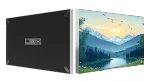
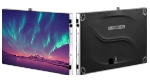


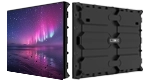
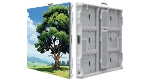



LEDX display
What Makes LEDX LED Displays Different? A Look Inside Our Indian Engineering & QC Process
Understanding Quality Control in LED Displays: What You Should Know
LED displays are now everywhere. You see them as digital display screens for advertising in shopping malls, airports, highways, corporate offices, stadiums, and retail stores. As the demand for LED screens has increased, the number of manufacturers has also grown. This has led to a rise in competition.
From the outside, an LED display may look simple. But within, it functions as a complete electronic system. It contains printed circuit boards (PCBs), driver ICs, power supply units, connectors, control software, mechanical structures etc. All these components aligned together make an LED display perform efficiently across different applications, from indoor installations to high brightness LED screen setups designed for outdoor visibility. There is no scope of anything going wrong, as it could lead to a defaulted LED display, resulting in flickering pixels, uneven brightness and many other issues.
That’s why quality checks in LED display manufacturing are not just a final step. They need to be an integral part of the LED display manufacturing process.
While many LED displays may look similar from the outside, the real difference lies in how they are engineered, assembled, and tested.
In this blog, we’ll take you through Indian engineering and quality control processes, and show how LEDX LED display technology revolves around reliability at every stage.
When people hear the term “quality control” for LED displays, they usually think it just means checking whether the display is working properly before it is delivered. But in reality, it’s not that simple. It’s more about how the product has been built from the start and how it promises consistency even after delivery.
As a buyer, what you really care about is whether the LED display will keep performing the same way after installation. A screen may look fine on day one, but if the internal components are not assembled properly, small issues can start showing up later.
An LED display is made up of multiple modules, and all of them need to function the same way.
Most common problems like uneven brightness, dead pixels or components not performing properly, are usually not caused during usage. They are often linked to how the product was manufactured in the first place.
Another thing to keep in mind is the environment. Given the Indian conditions, it is crucial to examine the build quality of an outdoor LED display, as it must withstand dust, moisture, and rain while ensuring smooth performance during long operating hours.
So, in simple terms, quality control is less about final checks and more about how carefully the product has been built before it even reaches you.
Why All LED Displays That Look Similar Are Not Built the Same
As a customer, you have the right to know how an LED display is actually built, not just what specifications the manufacturer or dealer shows you on paper. When we talk about the real-world applications, performance is usually judged by factors that are not always visible upfront.
To understand this difference, here are some things you must know.
1. Specifications Are Just Surface-Level Indicators
When you compare LED displays, it’s easy to refer to numbers like pixel pitch, brightness, or cabinet size. These help you shortlist options, especially in cases like a fine pitch LED display, where visual clarity and pixel density matter more than just brightness, but they still don’t tell you how well the display is built from the inside.
2. Day-One Output vs Long-Term Performance
It is hard to decide about the efficiency and performance of LED displays just on day one, since problems like uneven brightness, damaged pixels etc. are likely to arise if the screen is not manufactured properly. The root cause lies from the time the LED display was assembled and checked at the factory of the manufacturer. Negligence at factory level in turn hampers the long-term performance of the screen.
3. Assembly Accuracy
An LED display is made using many small electronic components, and each one needs to be placed and connected correctly. If the soldering is not done properly or components are slightly misaligned, it can affect how the display performs.
4. Uniformity Across Modules
Every LED display is made up of multiple modules working together. For the screen to look smooth and uniform, all these modules need to be aligned.
What Happens Inside LEDX’s Fully Automated LED Display Manufacturing Facility?
When you enter our manufacturing facility in Gujarat, you do not see a typical assembly setup. You see a fully-automated electronic production environment. It follows a one-directional material flow.
The process follows a fully integrated manufacturing approach, from incoming material inspection to final ageing and dispatch. Each PCB moves through a closed production cycle where systems detect and isolate deviations at the earliest stage, preventing defect carryover across modules.
This is how LEDX displays are made at the factory floor.
The process starts with controlled solder paste deposition on PCB pads. SPI systems measure paste volume, height, and alignment. Variations at this stage directly affect solder joint integrity, so the system flags and isolates them before component placement. Pick-and-place machines mount LEDs and surface-mount components with high positional accuracy. Controlled reflow soldering forms stable electrical and mechanical interconnections. This stage defines the electrical reliability of the PCB. AOI systems scan each board after reflow and verify component placement, polarity, and solder quality against reference data. Missed defects at this stage lead to pixel failure, brightness variation, or module-level faults during operation. We integrate AOI within a rigorous quality check framework of 60+ points across the production line to eliminate such risks.
Automated coating systems apply a uniform protective layer over the PCB surface. This layer shields circuitry from moisture, dust, and environmental exposure. Adhesive application and controlled curing further stabilize components under operational stress, especially in Indian conditions. Automated fastening systems maintain uniform mechanical assembly across modules. The facility operates under strict ESD-controlled conditions to prevent static-induced damage to LEDs and driver ICs, which directly impacts long-term reliability. Each module undergoes a 72+ hour continuous ageing cycle under operating conditions. This stage validates brightness stability, pixel performance, and overall system reliability before dispatch.
Final Thoughts
An LED display is not just a screen. It becomes part of your space. It represents your brand, your message, and your investment.
At LEDX, we take that responsibility. We know that even a small issue on-site can affect performance and trust. With the help of our skilled team, we conduct thorough quality-check for every LED display component from the very beginning.
Afterall, we are rooted with the belief that reliability is not a promise made in words. It is built into every active LED display we manufacture.
FAQs
What makes LEDX display engineering different from other manufacturers?
LEDX LED display engineering is based on a controlled manufacturing process. Every module goes through automated assembly, proper inspection, protective treatment, and ageing testing before dispatch. By checking each stage carefully, we reduce the chances of defects and ensure stable performance over time.
Why is the aging test important for LED displays?
The ageing test allows us to run each display under working conditions before shipment. This helps identify early-stage issues and guarantees that the module performs properly before it is installed on-site.
What is the lifespan of an LED display screen?
The average lifespan of an LED display screen typically ranges from 60,000 to 100,000 hours, depending on how you use and maintain the LED screen. This means the display can operate for several years under normal working conditions.

